
For decades, many organizations have approached disability in the workplace primarily as a matter of legal compliance. Policies, accommodations, and procedures have often been driven by the need to meet statutory requirements rather than by a genuine belief in the value that persons with disabilities bring to organizations and economies. While compliance remains essential—it safeguards rights and establishes minimum standards—it is no longer sufficient.
In today’s rapidly evolving world of work, organizations have an opportunity to move beyond accommodation toward a more transformative vision: disability as a core dimension of inclusion and a driver of innovation, resilience, and sustainable growth.
This shift is not only a moral or social imperative. It is a strategic one. As unemployment persists, skills gaps widen, technology reshapes work, and organizations search for diverse talent, disability inclusion is increasingly linked to performance, adaptability, and long-term impact.
In Kenya, the disability inclusion agenda has been shaped by progressive legal and policy frameworks, most recently the Persons with Disabilities Act, 2025, which strengthens protections against discrimination and promotes equal participation of persons with disabilities in employment, education, and public life. This Act builds on earlier commitments and aligns with the Constitution of Kenya (2010) and international instruments such as the UN Convention on the Rights of Persons with Disabilities (CRPD).
These frameworks have been transformative. They affirm that discrimination on the basis of disability is unacceptable and that accessibility and reasonable accommodation are rights, not favors.
However, a purely compliance-driven approach has clear limitations. When disability is treated mainly as a legal obligation, employees with disabilities may be perceived—often unintentionally—as risks, exceptions, or costs. Accommodations may be viewed as burdens rather than as investments in human capital. Inclusion, in such environments, becomes reactive rather than intentional.
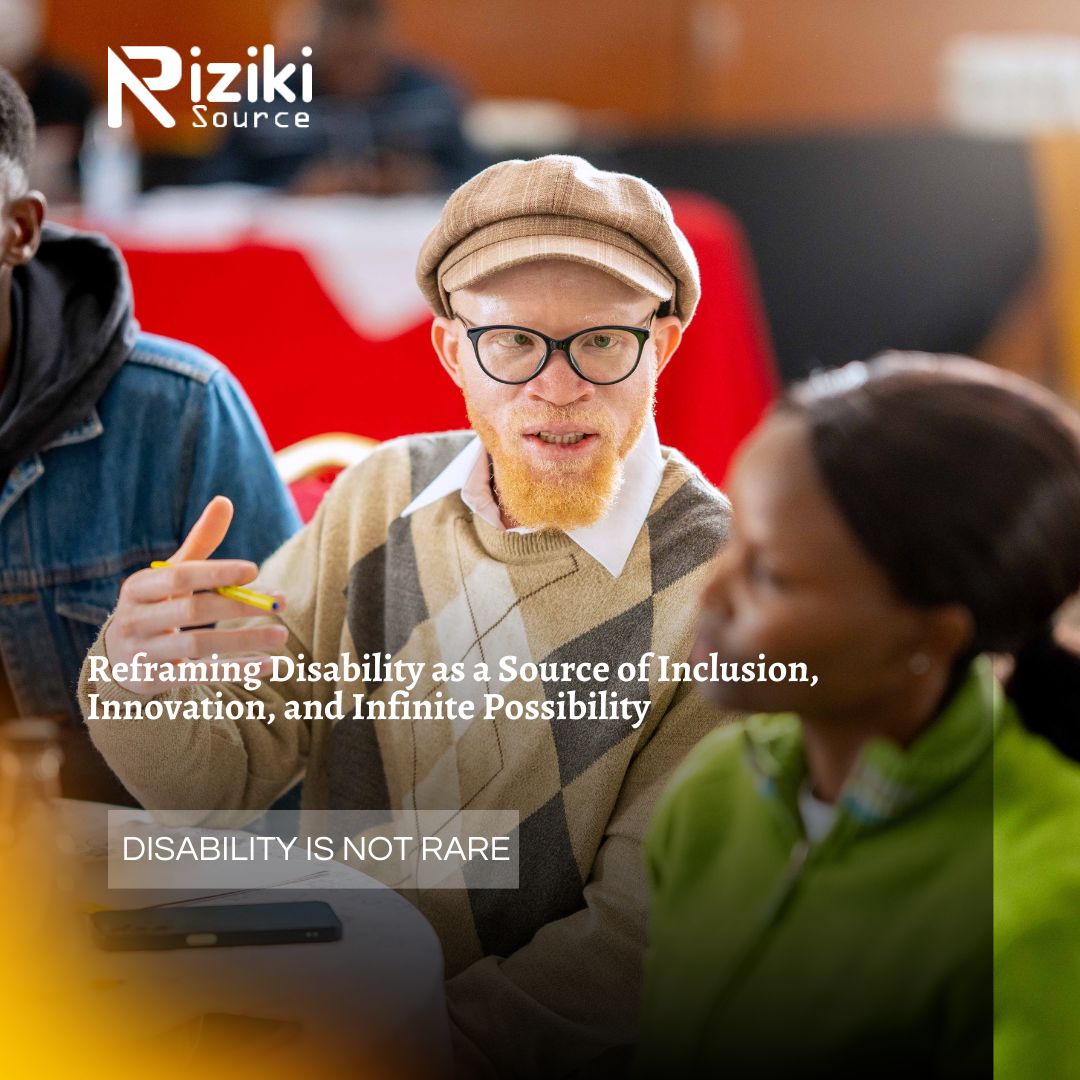
This mindset reinforces outdated assumptions about productivity, capability, and “fit.” It also ignores an important reality: disability is not rare. According to the World Health Organization, over 1.3 billion people globally—approximately 16% of the world’s population—live with a disability. In Kenya, national estimates indicate that millions of people live with disabilities, many of whom are of working age but remain excluded from formal employment due to systemic barriers rather than lack of ability.
Reframing disability begins with recognizing it as a natural and valuable form of human diversity. Disability is not only about impairment; it is shaped by social, environmental, and organizational barriers. Often, people are “disabled” not by their conditions but by inaccessible workplaces, rigid schedules, inflexible performance systems, inaccessible technology, and cultures that equate sameness with competence.
When organizations remove these barriers, the benefits extend far beyond persons with disabilities. Flexible work arrangements, clear communication, accessible digital tools, captioned meetings, and ergonomic environments improve productivity and well-being for many employees, including caregivers, older workers, and those in remote or hybrid roles.
This is the principle of universal design—designing systems and processes that are usable by as many people as possible from the outset. Rather than asking, “How do we accommodate this individual?” inclusive organizations ask, “How do we design work so diverse people can thrive?”
There is growing evidence that disability inclusion strengthens organizational performance. Research consistently shows that organizations that intentionally include persons with disabilities experience higher employee engagement, stronger retention, improved problem-solving, and enhanced innovation.
Employees with disabilities often bring highly developed skills in adaptability, resilience, and creative problem-solving—skills sharpened by navigating environments not designed with them in mind. These capabilities are invaluable in workplaces facing constant change, uncertainty, and complexity.
Inclusion also expands access to talent. By excluding persons with disabilities, organizations overlook a vast, underutilized workforce. In Kenya, where youth unemployment remains high, disability-inclusive hiring is both a social and economic necessity. Inclusive recruitment practices—such as accessible job advertisements, skills-based assessments, and flexible interview formats—enable organizations to identify talent that traditional processes miss.
Retention is another critical factor. Employees who feel respected, supported, and valued are more likely to remain with their employers. Disability-inclusive cultures foster trust, loyalty, and institutional continuity, reducing turnover costs and preserving organizational knowledge.
Organizations like Riziki Source demonstrate what it looks like to move from compliance to meaningful inclusion. By working directly with organizations of persons with disabilities (OPDs), employers, and job seekers with disabilities, Riziki Source bridges the gap between policy intent and lived reality.
Riziki Source supports disability inclusion through:
- Mobilizing and preparing job seekers with disabilities for decent work opportunities
- Partnering with OPDs to reach diverse disability groups at community level
- Supporting employers to design inclusive recruitment, onboarding, and retention practices
- Promoting employer awareness on the Persons with Disabilities Act, 2025 and practical workplace accessibility
- Strengthening data, learning, and feedback mechanisms to ensure inclusion is measurable and sustainable
This ecosystem-based approach recognizes that inclusion does not happen in isolation. It requires collaboration, trust, and shared accountability across employers, civil society, and persons with disabilities themselves.
Technology has the potential to significantly accelerate disability inclusion. Assistive technologies such as screen readers, magnification software, speech-to-text tools, and alternative input devices enable many persons with disabilities to perform roles that were previously inaccessible.
At the same time, mainstream innovations—remote work, flexible scheduling, cloud-based collaboration—have normalized practices that benefit diverse workers. However, technology can also become a barrier when accessibility is ignored.
Inclusive organizations treat digital accessibility as a standard, not an afterthought. They ensure that websites, HR systems, learning platforms, and communication tools are usable by people with different sensory, physical, and cognitive abilities. Crucially, they involve persons with disabilities in the design and testing of these systems, recognizing lived experience as expertise.
Policies and tools alone cannot create inclusion. Culture matters, and leadership sets the tone. Inclusive leaders normalize conversations about disability, reduce stigma, and encourage openness around access needs. They respond with curiosity and respect rather than discomfort or doubt.
They also understand that disability intersects with other identities such as gender, age, poverty, and geography—shaping experiences of exclusion and opportunity in complex ways.
Employee networks, mentorship programs, and disability-focused working groups can strengthen culture when they are meaningfully supported and connected to decision-making. When persons with disabilities are part of leadership, strategy, and evaluation, inclusion moves from symbolism to substance.
Viewing disability through a lens of infinite possibility requires organizations to question long-held assumptions about productivity, presence, and performance. It challenges the myth of the “ideal worker” and replaces it with a more realistic and humane understanding of human capability.
In an era defined by uncertainty, the most valuable skills—adaptability, empathy, creativity, and collaboration—are often strengths developed through lived experience, including disability. By embracing these strengths, organizations do more than include persons with disabilities; they redefine excellence.
Inclusion is not about lowering standards. It is about broadening them. Systems designed for those at the margins often deliver better outcomes for everyone.
For too long, disability in the workplace has been framed as a challenge to manage rather than a possibility to embrace. Legal compliance, including adherence to the Persons with Disabilities Act, 2025, is essential—but it should be the foundation, not the finish line.
Organizations that will thrive in the years ahead are those that move from obligation to opportunity, from accommodation to inclusion, and from exclusion to shared value.
By rethinking how work is designed, redesigning systems with accessibility at the core, and recommitting to inclusive leadership, organizations can unlock the full potential of persons with disabilities.
The time to change the lens is now.


